My kissing suggestions appear in the Sydney Morning Herald’s Good Weekend.

I was delighted to contribute to the regular “How To” column in Good Weekend, published by The Sydney Morning Herald. Known for taking a light-hearted yet informative look at everyday topics, the column explored the art and science of the first kiss, drawing on research and expert perspectives to unpack why this memorable milestone captures so much anticipation and emotion.

A first kiss is rarely just about the kiss itself. It often represents curiosity, vulnerability and the possibility of a new connection. While people can feel pressure to make it “perfect,” the most meaningful first kisses are usually those where both people feel comfortable, present and attuned to one another. Rather than focusing on technique, paying attention to consent, mutual enthusiasm and the other person’s cues can help create a moment that feels natural, respectful and genuinely enjoyable.

Read it here: https://www.smh.com.au/national/want-to-nail-that-first-kiss-follow-the-70-30-ratio-20260721-p60haa.html

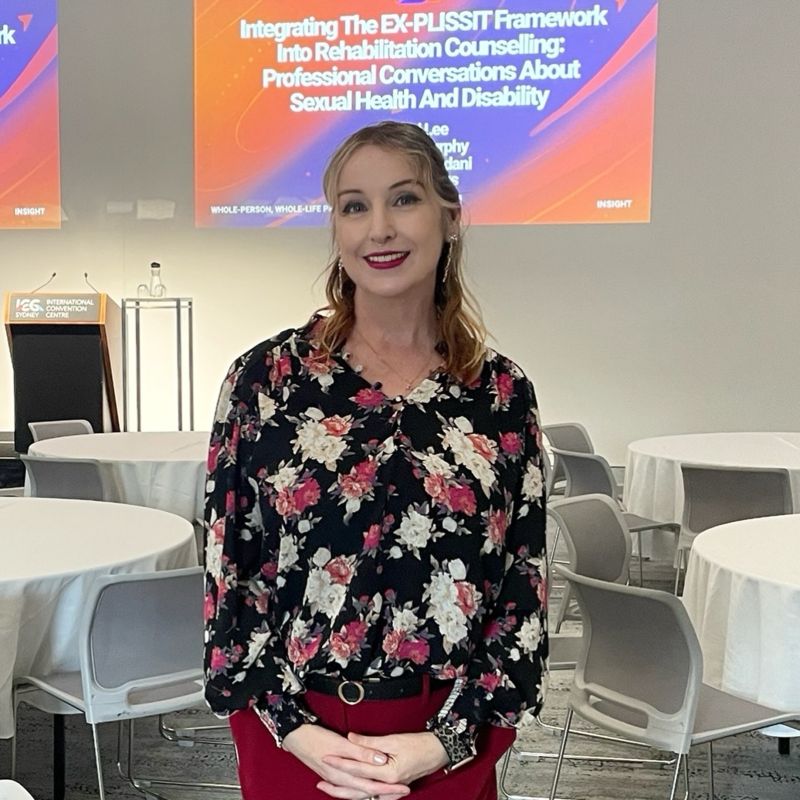
Presenting on Rehabilitation Counsellors Talking About Sex at ASORC 2026 Conference

Today I had the privilege of presenting alongside brilliant colleagues at the ICC in Darling Harbour for the ASORC – Australian Society of Rehabilitation Counsellors National Conference. My first Master’s degree was in rehabilitation counselling, and while I no longer work as an RC, I am a strong advocate for this valuable profession. It was a genuine pleasure to speak about the important role that sexology can play within multidisciplinary rehabilitation, and why sexual wellbeing deserves to be recognised as part of holistic, person-centred care rather than something left unspoken.

Our presentation explored the Ex-PLISSIT model, a practical framework that helps rehabilitation professionals confidently address sexual health concerns within their scope of practice. The model emphasises giving clients permission to raise sexuality-related concerns, providing limited information and specific suggestions where appropriate, and recognising when more intensive therapy from a qualified sexologist or psychosexual therapist is indicated. Rather than expecting every rehabilitation counsellor to become a sex therapist, the Ex-PLISSIT model empowers clinicians to respond competently and compassionately when these conversations naturally arise.

We also discussed how this approach is highly relevant across Australian rehabilitation settings, including supporting people recovering from workplace injuries, military veterans, police officers, first responders, and clients navigating return-to-work following illness, injury, disability, or psychological trauma. Sexual wellbeing is often affected by pain, medication, changes in identity, relationship stress, mental health, and physical functioning, yet it is rarely discussed in rehabilitation. It was wonderful to see such engagement with this topic, and I’m hopeful that conversations like these will continue to broaden our understanding of what truly holistic rehabilitation looks like.

Reach out if you are a professional who would like to learn more about using the Ex-PLISSIT model in your practice. Also, I have a free booklet on the topic available here.


Let’s Talk About Sexually Transmitted Infections

It’s totally normal to feel a bit nervous about thinking or talking about STIs. But knowing the symptoms and how they’re passed on can actually make things feel less scary and give you more confidence to look after yourself and your partners.

When it comes to sexually transmitted infections (STIs), there’s often a lot of confusion about what’s what. Are they bacterial, viral, or something else entirely? And why does that matter? The answer is important, because it helps us understand which STIs are curable, which can be managed but not eliminated, and which need specific prevention strategies. At Sage Sexology, I believe knowledge is one of the best tools we have for protecting our health and reducing stigma. Let’s break down the main types of STIs—bacterial, viral, and parasitic—in a way that’s clear, practical, and easy to remember.

🦠

Bacterial STIs (usually curable with antibiotics)

    • Chlamydia (Chlamydia trachomatis)

    • Gonorrhoea (Neisseria gonorrhoeae)

    • Syphilis (Treponema pallidum)

    • Mycoplasma genitalium (M. genitalium)

    • Chancroid (Haemophilus ducreyi)

    • Granuloma inguinale (Donovanosis) (Klebsiella granulomatis)

    • Lymphogranuloma venereum (LGV) (a subtype of Chlamydia trachomatis)

Parasitic STIs (curable with medications)

  • Trichomoniasis (Trichomonas vaginalis, a protozoan parasite)

  • Pubic lice (crabs) (Pthirus pubis)

  • Scabies (Sarcoptes scabiei mite, can be sexually transmitted through skin contact)

🪱


🧬

Viral STIs (Some are  curable, and others manageable)

    • HIV (Human Immunodeficiency Virus)

    • Herpes simplex virus (HSV-1 & HSV-2)

    • Human Papillomavirus (HPV) – some strains cause genital warts, others linked to cancers

    • Hepatitis B virus (HBV) – preventable by vaccine

    • Hepatitis C virus (HCV) – sometimes sexually transmitted, curable with antivirals

    • Molluscum contagiosum (poxvirus, usually clears on its own)


    • Bacteria → curable with antibiotics.

    • Viruses → not curable, but suppressible; vaccines exist for some.

    • Parasites → curable with antiparasitic meds or topical treatments.

Sexual health clinics offer free and cheap services and information. Click here for a list of sexual health clinics in Australia. If you would like to talk about your concerns or recent diagnosis of a sexually transmitted infection with me, let’s connect.

AI and ChatGPT can provide the basics, but it is vital to speak with a human about your sexual health concerns.

It is important to reflect on the online tools we use to explore our sexual wellbeing.

As AI becomes more common in our everyday lives, many people are turning to it for answers about sexual wellbeing. It can feel quick, private, and even comforting to ask a chatbot questions that might feel too personal to bring up elsewhere. But like any tool, there are limits and risks. Below are some of the main concerns to keep in mind — you might like to read through them carefully, reflect on what feels most relevant to you, and consider how you use AI when it comes to your own health, sexuality, and relationships.

Main Issues with Using AI for Sexual Health Information

1. Accuracy & Safety

  • AI can produce outdated, incomplete, or incorrect sexual health information.

  • For example, it might give misinformation about contraception effectiveness, STI testing windows, or consent laws, which could put people at real medical or legal risk.

  • Unlike a health professional, AI doesn’t assess a person’s unique medical history.

2. Nuance of Sexuality

  • Sexual health isn’t just medical — it’s deeply personal, cultural, and relational. AI often oversimplifies complex issues like desire, trauma, identity, or kink.

  • It may unintentionally reinforce stigma (e.g., heteronormativity, pathologising kink or non-monogamy).

3. Privacy & Confidentiality

  • Users may share intimate details (sexual behaviours, fantasies, health concerns) without realising that these could be stored, used for training, or vulnerable to leaks.

  • This is especially risky for LGBTQIA+, sex workers, or people in regions where sexuality is criminalised.

4. Lack of Emotional Support

  • Sexual health concerns often come with shame, fear, or trauma. AI can provide factual answers but can’t offer empathy, attunement, or therapeutic containment the way a trained therapist or sexual health professional can.

  • Lack of Empathy and Human Connection: AI chatbots, while able to provide information, cannot replicate the empathy, compassion, and nuanced understanding of a human therapist or doctor. Sexual health and wellbeing often involve sensitive, personal, and emotional topics that require a level of human connection that AI currently cannot provide.

5. Risk of Harmful Advice

  • Someone might turn to AI instead of seeking testing, medical treatment, or professional help.

  • Example: AI suggesting “watch and wait” when urgent medical care is needed.

  • Or, in relationships, suggesting communication strategies without recognising abuse dynamics.

6. Regulation & Liability

  • There’s no guarantee that AI-provided sexual health info complies with local medical guidelines or laws (e.g., age of consent, reproductive rights, confidentiality obligations).

  • If harm occurs, accountability is unclear: is it the developer’s responsibility, or the user’s?

In short:

AI can be a useful starting point for education (basic anatomy, STI info, communication tips, normalising diversity), but it should never replace:

  • Medical professionals for assessment/diagnosis/treatment

  • Sex therapists/counsellors for emotional/relational work, including ongoing monitoring and modifying interventions used

  • Sexual health services for testing, prevention, and expertise

Would you like to talk about AI and your sexual wellbeing with me? Let’s connect.

Questions to me help explore my sexual self?

Asking ourselves questions about sex, desire, fears and our feelings helps us reveal and reflect.

Take a look at these questions below. You might like to journal, writing these down in a special book, for you to continue exploring. Or perhaps you prefer to write a quick question on a scrap of paper then toss it out. Or even ponder a question in the shower. If you’re feeling courageous, work through each prompt from top to bottom. Or look through for those that pique your interest.

  • How do I define sexual pleasure for myself?
  • What are my favorite ways to feel connected to my body? Do I give myself time to explore these? What obstacles are preventing me from connecting to my body?
  • How does sexual intimacy fit into my overall sense of well-being?
  • What types of touch or sensations feel most pleasurable to me?
  • Are there any societal or cultural beliefs about sex that I’ve internalised? How do they affect me?
  • How does shame around sex show up in my life, and how can I work to release it?
  • What fantasies do I have, and how do they make me feel?
  • How comfortable am I with my naked body? What can I do to embrace it more fully?
  • What are my earliest memories of feeling curious about sex and intimacy?
  • What does sexual empowerment look like to me?
  • How do I define sexual boundaries, and how do I express them?
  • What is the relationship between my emotions and my sexual desires?
  • How do I feel about self-pleasure or masturbation? What are my thoughts about its role in my life?
  • Are there parts of my body that I’ve felt insecure about during sex – either alone or with others? How can I cultivate acceptance?
  • How does my past influence my current sexual behaviors or desires?
  • What activities help me feel sensual, apart from sex?
  • How do I balance the needs for sexual exploration and emotional safety?
  • Are there any kinks or fetishes I’m curious about exploring? How do they make me feel?
  • What are the ways I can honor my body and its needs daily?
  • How has my understanding of my sexual orientation evolved over time?
  • What role does spontaneity play in my sexual experiences?
  • How can I ensure that my sexual practices align with my personal values?
  • What does it mean to me to be sexually confident?
  • What impact does pornography have on my sexual self-image or expectations?
  • In what ways do I give myself permission to explore my desires?
  • How comfortable am I with experimenting with toys, tools, or props during sex?
  • What steps can I take to become more sexually literate or informed?
  • How do stress or anxiety influence my sexual desires?
  • How do I feel about exploring slow, mindful sex versus fast, passionate encounters?
  • How do my sexual desires change with different phases of my life or mood?
  • How can I improve my sense of trust and safety in sexual relationships?
  • How do I explore my fantasies safely and ethically?
  • What kind of sexual energy do I feel most drawn to – playful, romantic, intense, etc.?
  • How can I create a sexual environment that feels sacred and special to me?
  • How do I feel about the relationship between sex and love?
  • Do I always need one with the other?
  • How do I practice gratitude for my sexual body and its experiences?
  • What role does humor play in my sexual experiences?
  • How do I feel about self-acceptance and body image in my sexual life?
  • How do I handle periods of sexual dry spells or low libido?
  • What’s my relationship with sexual fantasies that I might not want to act on? How do I feel about them?
  • How do I develop a practice of sexual self-care?
  • How do I define sexual liberation for myself, and how does it feel in my body?
  • How can I embrace sexual playfulness as I age?
  • What does it mean to be sexually autonomous, and how can I nurture that within myself?
  • What kinds of activities can I explore that deepen intimacy without leading to sex?
  • How can I better understand my body’s signals for when I want sex and when I don’t?
  • How can I integrate self-love practices into my sexual experiences?
  • How do I feel about setting goals for sexual growth or experiences?

Would you like to talk about some of these questions or answers with me? Let’s connect.