
Desire & Libido
Understanding and embracing your fluctuations in desire and libido can help you lead a more informed, balanced and satisfying sexual life.
Topics
It is common for sexual desire to wane due to routine, stress, or shifting priorities. However, it’s possible to reignite passion and rediscover a positive sexual identity.
- Recognising that libido naturally fluctuates over time
- Reducing shame around your perceived high or low libido
- Addressing common causes of mismatched sexual desire
Exploring these fluctuations and their possible causes can provide strategies to bridge the gap in sexual desire, ensuring everyone feels respected and fulfilled.
Mental health issues like anxiety, depression, fear, trauma and chronic stress can significantly lower libido, creating personal uncertainty and strain in relationships.
- How mental health and libido interact
- Addressing the emotional barriers to sexual desire
- Supporting mental health while improving sexual intimacy
Therapy offers a holistic approach to addressing the emotional and psychological factors that affect sexual desire, helping you manage mental health challenges while fostering deeper emotional and physical intimacy.
Illness, whether temporary or long term, can affect libido and desire for many reasons. This can lead to personal uncertainty and strain in relationships.
- Understanding how physical health impacts sexual desire
- Addressing the physical and emotional barriers to intimacy
- Supporting overall health while enhancing sexual connection
I offer you a holistic approach to addressing the physical and emotional factors affecting desire, helping you manage illness-related challenges while fostering deeper emotional and physical intimacy.
Stress, hormonal imbalances, medications, or underlying health conditions can cause low libido. While it’s normal for sexual desire to fluctuate over time, it can become a source of shame or tension when in relationships.
- Exploring physical, emotional, and psychological factors that reduce desire
- Impact of stress, medication, and health conditions on libido
- Normalising fluctuations in sexual desire
Counselling offers a supportive environment to explore the root causes of low libido and work toward solutions that prioritise emotional and physical well-being.
Having a higher sex drive than your partner can create feelings of frustration or rejection. However, with open communication and understanding, these differences in libido can be managed effectively.
- Managing an increased sexual drive when a partner’s libido is lower
- Communicating needs without overwhelming a partner
- Finding healthy outlets for sexual expression
I help those with high libido express their needs in a way that fosters connection, offering strategies for finding balance and ensuring that desires are honoured in a healthy, consensual manner.
Hormonal changes, such as those experienced during cancer treatment, pregnancy, menopause, or through hormonal treatments, can drastically impact libido. These shifts can leave us feeling disconnected or uncertain.
- Impact of hormonal changes on libido
- Understanding the biological and emotional connection to sexual desire
- Navigating hormone-related libido shifts in relationships
Therapy can help us navigate these transitions with empathy and communication, understanding the biological basis behind the changes and finding new ways to stay connected intimately.
Cultural and religious beliefs often shape how individuals view their own libido, sometimes leading to feelings of guilt, shame, or confusion about sexual desire.
- Upbringing, cultural norms, or religious beliefs can affect sexual desire
- Addressing guilt or shame surrounding libido
- Creating space for a healthy sexual identity within cultural frameworks
Therapy can help us explore these cultural influences, offering a space for healing and acceptance. By navigating these frameworks, I help clients embrace a healthier, more fulfilling sexual identity that aligns with their values and desires.
For some people, low or no sexual desire is a perfectly natural part of their identity. This can result in shame or difficulty navigating relationships where sexual intimacy plays a central role.
- Understanding asexuality and its spectrum
- Supporting partners with differing sexual needs
- Honouring non-sexual forms of intimacy and connection
Counselling can help reduce shame and stigma. If you want to build intimacy we can discuss strategies including emotional connection, physical closeness, or other shared experiences that don’t rely on sexual interaction.
There are many other ways desire and libido can lead to uncertainty and concern. You might fear you are not “normal” or things are different and you’re not sure why.
- Libido and healthy stages of ageing
- Gender and sexuality stereotypes
- Assumptions and unmet expectations
Talking with me about your libido and intensity of sexual desire can help clarify what you are genuinely wanting in your sexual life. We can then identify and navigate the barriers to you living a satisfying sexual life.
Resources

How Stress Effects Relationships by the Gottman Blog. I have extensively studied the Gottman Method and it is considered a gold star approach to relationships.
How to Talk to Your Partner If Endometriosis Impacts Your Sex Life by the Endometriosis Foundation of America
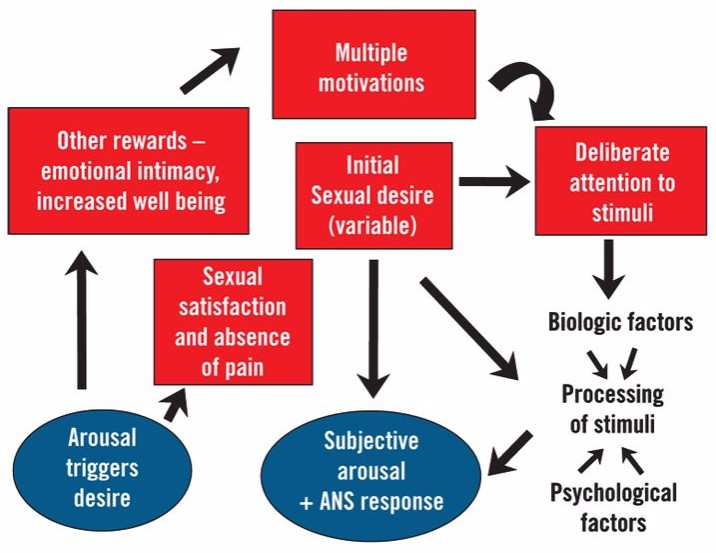
Rosemary Basson’s (2000) model of sexual arousal stresses the interdependence of relationship factors, emotional intimacy, sexual stimuli, and sexual function. *ANS is Autonomic Nervous System