Kink & Fetish
If kink and fetish are in your life, whether intentionally or unintentionally, understanding and exploring your thoughts and feelings can lead to greater self-awareness and reduced shame. This helps foster increased acceptance and balance, both individually and within relationships.
Topics
Kinks and fetishes are common aspects of sexual expression that can bring excitement and novelty to your sex life. They can also, however, bring uncertainty, questions about your sexuality, confusion and shame. Through understanding why you are drawn to a particular thought, feeling or behaviour, you can learn more about your desires and why kinks and fetishes can be a healthy part of sexual expression.
- Defining kinks and fetishes and their role in sexual expression
- Exploring if kinks and fetishes actually differ from mainstream sexual preferences
- Normalising diverse sexual desires in a consensual framework
Therapy offers a safe, non-judgmental space for individuals and couples to explore and understand these aspects of sexuality, ensuring that desires are communicated clearly and practiced consensually. By normalising diverse sexual interests, we help individuals find balance in their lives, embrace their preferences, and find a healthy way to incorporate them into their intimate relationships.
It’s common for partners to have different levels of interest in specific kinks or fetishes, which can create tension or discomfort in the relationship.
- Managing desire discrepancies when partners have different kinks or preferences
- Building trust and mutual understanding around sexual boundaries
- Developing compromises that respect both partners’ needs
Therapy helps you navigate these differences by fostering open, honest discussions about boundaries, consent, and comfort levels. We help partners find a balance between fulfilling desires and ensuring that both individuals feel respected. Through communication and compromise, couples can explore new sexual dynamics while maintaining trust and emotional safety.
Many individuals who have kinks or fetishes may experience feelings of shame or guilt, often due to societal stigma or internalised judgments. Therapy provides a compassionate, non-judgmental space to explore these feelings, helping individuals build self-acceptance and understand their desires.
- Addressing societal stigma and internal shame related to non-traditional sexual interests
- Creating a healthy relationship with one’s own desires
- Building self-acceptance and reducing guilt around sexual preferences
- Create balance in your life.
By deconstructing negative cultural narratives around kinks and fetishes, I support clients in creating healthier, more positive relationships with their sexual identities. I also understand that some clients want to change their behaviour around fetish and kink, including stopping altogether. Together, we can find ways to help you navigate this, and enjoy balance in your life.
Exploring kinks and fetishes can be exciting but also requires a strong foundation of trust, communication, and consent.
- Emphasising the importance of communication, consent, and boundaries
- Understanding risk-aware, consensual kink and other frameworks
- Creating a safe space for trying new experiences
Therapy helps couples navigate these explorations safely by introducing key principles such as risk-aware, consensual kink and the safe, sane, and consensual framework. I support partners in setting clear boundaries, ensuring mutual consent, and building a supportive environment where both individuals feel safe to express and explore their desires.
Introducing kinks or fetishes to a relationship can be daunting, especially when you’re unsure how your partner will respond.
- How to initiate conversations about kinks or fetishes with a partner
- Techniques for reducing anxiety or fear of rejection when discussing new desires
- Ensuring a positive, open dialogue that strengthens the relationship
Therapy provides guidance on how to approach these conversations with sensitivity and openness. I can help you reduce anxiety or fear of rejection, offering techniques to ensure that the discussion is constructive, respectful, and focused on building mutual understanding. By fostering a positive, non-pressured dialogue, partners can explore new sexual possibilities together in a way that strengthens their emotional and physical connection.
Power dynamics, such as dominance and submission (D/s) or BDSM, can be an enriching part of a sexual relationship for those who engage in them consensually. However, these dynamics require clear communication and boundaries to ensure the safety and well-being of all partners.
- Understanding the psychological and emotional aspects of dominance and submission
- Navigating consent and control in power dynamics
- Identifying boundaries, including if power dynamics are incorporated 24/7, or at particular times.
- Ensuring that power exchange strengthens, rather than harms, the relationship
Therapy provides a structured approach to understanding these dynamics, helping you explore power exchange in a way that is fulfilling for all parties. I work with individuals to ensure that these dynamics are practiced in a safe, respectful manner that deepens intimacy and trust rather than leading to emotional harm.
In long-term relationships, it can be challenging to maintain the same level of excitement around kinks and fetishes as at the beginning of the relationship. However, with open communication and creativity, you can continue to explore and grow sexually over time.
- Keeping kink and fetish interests alive in long-term relationships
- Balancing routine with novelty and exploration
- Maintaining mutual desire and excitement over time
Therapy helps you find ways to keep your kink interests alive by introducing new ideas, adjusting to changing desires, and ensuring that partners feel fulfilled. By balancing routine with exploration, long-term relationships can maintain mutual desire and excitement.
While kink and fetish play can be consensual and enjoyable, negative or traumatic experiences can sometimes occur, especially when boundaries are crossed or consent is violated.
- Addressing negative or traumatic experiences related to kink or fetish
- Understanding the emotional impact of boundary violations
- Rebuilding trust and emotional safety in future sexual exploration
Therapy helps individuals heal from these experiences, addressing the emotional aftermath and working to rebuild trust in future sexual encounters. I create a safe, supportive environment where you can work through feelings of fear or shame, and develop healthy boundaries that foster safety and connection in future explorations.
Care and Aftercare are vital parts of any kink or fetish experience, especially those that involve intense emotions or physical sensations. It helps you process the experience and reconnect emotionally and physically. This is true both individually, and in partnered experiences.
- The importance of emotional and physical aftercare following intense scenes or experiences
- Building emotional intimacy and connection after kink play
- Addressing feelings of vulnerability, discomfort, or emotional intensity
Therapy emphasises the importance of aftercare, providing couples with tools to ensure that both partners feel safe, cared for, and supported after engaging in kink play. This practice not only helps prevent emotional distress but also strengthens the bond between partners through mutual vulnerability and trust.
Resources

Here is a list of some identified kinks and fetishes: https://www.miralishahidi.ir/resources/List_of_paraphilias.pdf
If academic texts don’t turn you off, and you’re interested in some historical insight (thankfully sexology is an evolving area of study, as many concepts in this publication are outdated) you might like to look over this 1894 publication: Psychopathia Sexualis.
“A forensic reference book for psychiatrists, physicians, and judges. Written in an academic style, its introduction noted that, to discourage lay readers, the author had deliberately chosen a scientific term for the title of the book and that he had written parts of it in Latin for the same purpose. Psychopathia Sexualis was one of the first books about sexual practices that studied homosexuality/bisexuality. It proposed consideration of the mental state of sex criminals in legal judgements of their crimes. During its time, it became the leading medico–legal textual authority on sexual pathology.”
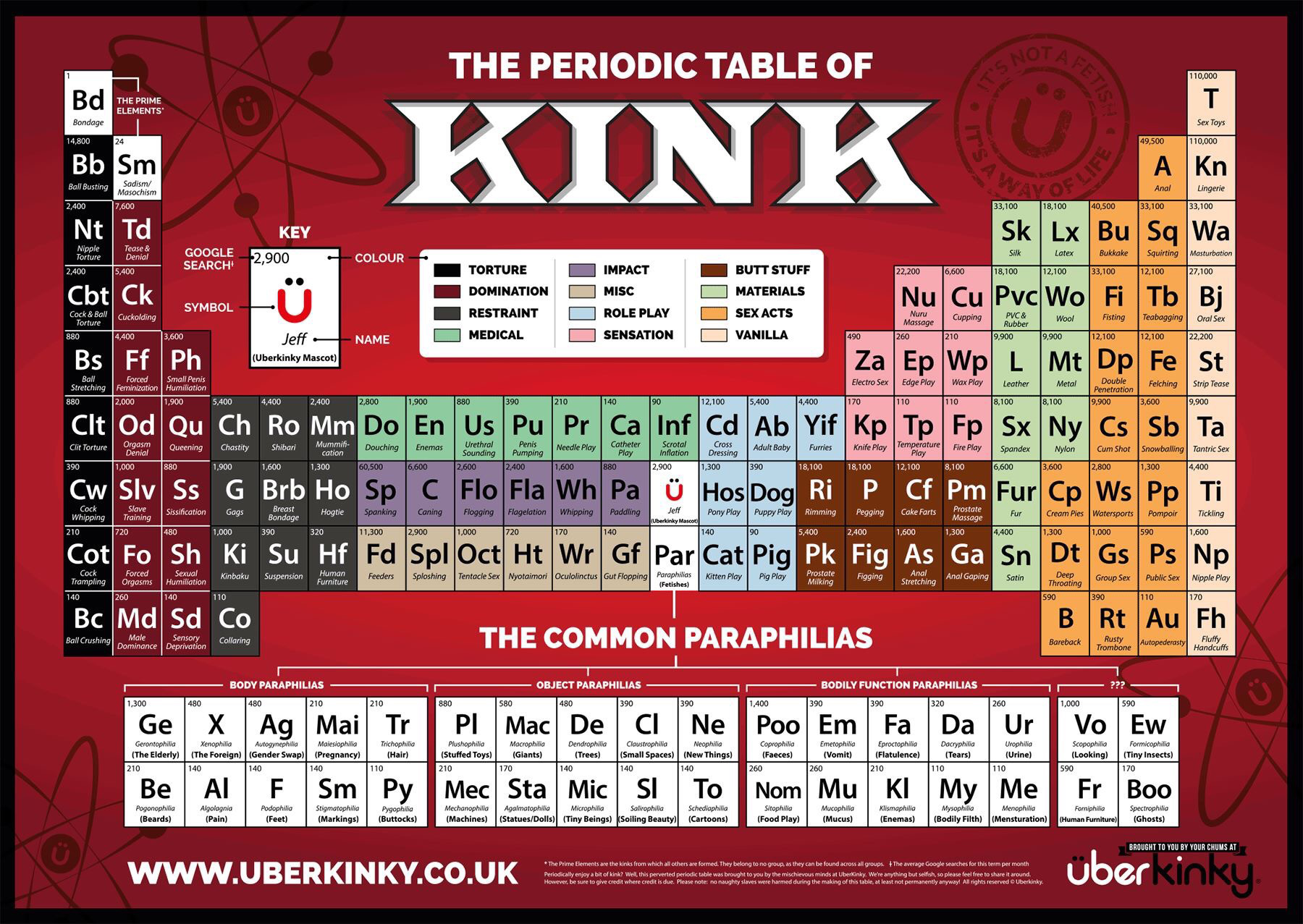
There are many, MANY different types of kinks and fetishes – in fact, if it is a thing, or a thought, it can be a kink. Here is a look at some kinky thoughts and things in a periodic table.